
In the world of California personal injury law, the last few years have been defined by a historic expansion of victim rights. However, as we move through 2026, a critical “sunset” provision is fundamentally altering how families seek justice for loved ones who have passed away following an accident. Understanding California survival action damages in 2026 is no longer just a matter of legal curiosity—it is a matter of financial survival for grieving families.
For decades, California was one of the few states that did not allow the estate of a deceased victim to recover damages for “pain and suffering” experienced before death. That changed temporarily with Senate Bill 447. But as that window closes in 2026, the rules of engagement for accident advocates and plaintiffs are shifting back to a more restrictive landscape.
Survival Action vs. Wrongful Death: The Crucial Distinction
To understand the 2026 changes, one must first distinguish between a Wrongful Death claim and a Survival Action. While they often stem from the same tragic accident, they serve two different legal purposes:
- Wrongful Death: This claim belongs to the surviving family members (heirs). It compensates them for their loss, such as the loss of financial support, companionship, and funeral expenses.
- Survival Action: This claim belongs to the deceased victim’s estate. It allows the estate to recover damages the victim personally suffered from the moment of the accident until the moment of their death.
The 2026 legal shift specifically impacts the Survival Action side of the ledger, particularly regarding non-economic damages.
The Rise and Fall of SB 447: A Five-Year Experiment
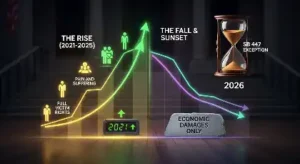 In 2021, California passed SB 447 as a response to the backlog of court cases and the perceived unfairness of the “death reward”—a dark legal reality where defendants could pay significantly less if a victim died before their case reached a verdict. Under SB 447, for the first time, estates could recover “non-economic damages” (pain, suffering, disfigurement, and emotional distress) that occurred between the injury and the death.
However, this was always intended to be a temporary measure. As of early 2026, the legislative extension efforts have faced significant hurdles. For many new cases filed this year, the ability to claim these subjective, high-value damages is being phased out, returning the state to a standard where only “special damages” (medical bills and lost wages) are easily recoverable in a survival action.
Why the 2026 Shift Matters for Your Case
The expiration of these expanded rights has three major implications for anyone involved in a personal injury or accident claim in California today:
1. The Valuation Gap
Without the ability to claim pain and suffering in a survival action, the total “value” of a case may drop significantly. In cases where a victim survived for weeks or months in a hospital before passing, the non-economic damages often far outweighed the medical bills. In 2026, attorneys must be more creative in how they categorize losses to ensure families receive full compensation.
2. Settlement Leverage
Insurance companies are well aware of the 2026 sunset. They are increasingly likely to stall negotiations if they believe the window for pain-and-suffering recovery has closed for a specific filing. This makes it imperative to have an advocate who understands the exact timeline of your filing and which legislative rules apply to your specific date of injury.
3. The Focus on Punitive Damages
As compensatory non-economic damages become harder to secure in survival actions, there is a renewed focus on punitive damages. If the defendant’s actions were particularly egregious—such as a drunk driving accident or extreme corporate negligence—the estate may still pursue punitive awards to hold the wrongdoer accountable, even if the “pain and suffering” window has technically sunset.
Navigating the “Retroactive” Trap
One of the most complex aspects of the 2026 transition is determining which cases are “grandfathered” in. Generally, cases that were granted a trial preference or were filed within the active window of SB 447 may still be eligible for expanded damages. However, for accidents occurring now, the “Sunset” is in full effect. This creates a tiered system of justice where two families with similar losses might receive vastly different compensation based solely on their filing date.
Proactive Steps for Families and Estates
 If you have lost a loved one due to someone else’s negligence in 2026, you cannot afford to wait. The legal window is not just closing; it is transforming. Here is what you must do:
- Secure Medical Records Immediately: Since economic damages (medical bills) are the primary recovery in survival actions post-sunset, having a meticulous record of every cent spent on the victim’s care is vital.
- Analyze the Timeline: Have a legal expert review whether your case falls under the temporary expansion or the new 2026 restrictions.
- Explore Wrongful Death Alternates: While the survival action is restricted, wrongful death claims for “loss of consortium” or “emotional support” for the survivors remain robust. A dual-track strategy is now essential.
Conclusion: Seeking Justice in a Changing Landscape
The 2026 shift in California survival action damages represents a return to a more challenging era for accident victims. However, it does not mean that justice is out of reach. It simply means that the “advocacy” in Accident Advocator is more important than ever. By focusing on detailed economic documentation and aggressive wrongful death litigation, families can still hold negligent parties responsible for the full scope of their loss.
The sunset of SB 447 is a reminder that laws are rarely static. As the gates on pain-and-suffering recovery narrow, your choice of legal strategy must become wider and more precise to navigate the hurdles of 2026 and beyond.