Unlike standard traffic accidents involving two human drivers exchanging insurance information, collisions involving autonomous devices blur the lines between personal negligence, product failure, and fleet operator accountability. Unravelling liability requires examining how traditional tort law adapts to AI navigation and shared transit systems.
The Multi-Party Problem: Identifying Responsible Entities
 Determining fault in an AI delivery robot or micromobility collision involves evaluating several entities that control, build, or deploy these devices. Key stakeholders typically include:
- The Fleet Operator: The commercial company managing deployment, dispatching, and live tracking of the delivery bots or micromobility units.
- Software Developers and Hardware Manufacturers: Organizations responsible for designing the physical chassis, sensor suites (LiDAR, radar, cameras), and machine learning perception models.
- Remote Human Supervisors: Teleoperators stationed in monitoring hubs who step in when autonomous systems request human intervention.
- Micromobility Riders or Pedestrians: Human actors whose speed, attention, or sudden trajectory shifts contribute directly to the event.
- Municipal Entities: Local government bodies responsible for maintaining public sidewalks, curb cuts, and roadway infrastructure.
Negligence vs. Product Liability: The Core Legal Paradigms
Legal claims stemming from sidewalk collisions generally split into two main frameworks: tort negligence and strict product liability.
1. Corporate Operator Negligence
If a fleet company fails to maintain its devices, deploys units with known software bugs, or overburdens a teleoperator with too many simultaneous bot streams, the company can be held liable under standard negligence theories. Under vicarious liability principles, an operator remains responsible for the acts and omissions of its employee monitors during active supervision.
2. Strict Product Liability
When an autonomous bot crashes due to sensor blind spots, perception classification errors (e.g., misidentifying an e-scooter as empty space), or braking failure, the claim shifts to product liability. Victims can allege:
- Design Defects: Imperfections in the device’s original layout or navigation algorithm.
- Manufacturing Defects: Assembly or hardware flaws unique to that specific unit.
- Marketing Defects (Failure to Warn): Inadequate warnings or instructions regarding operational limits in adverse weather or heavy crowd conditions.
Complexities Introduced by Shared Micromobility Fleets
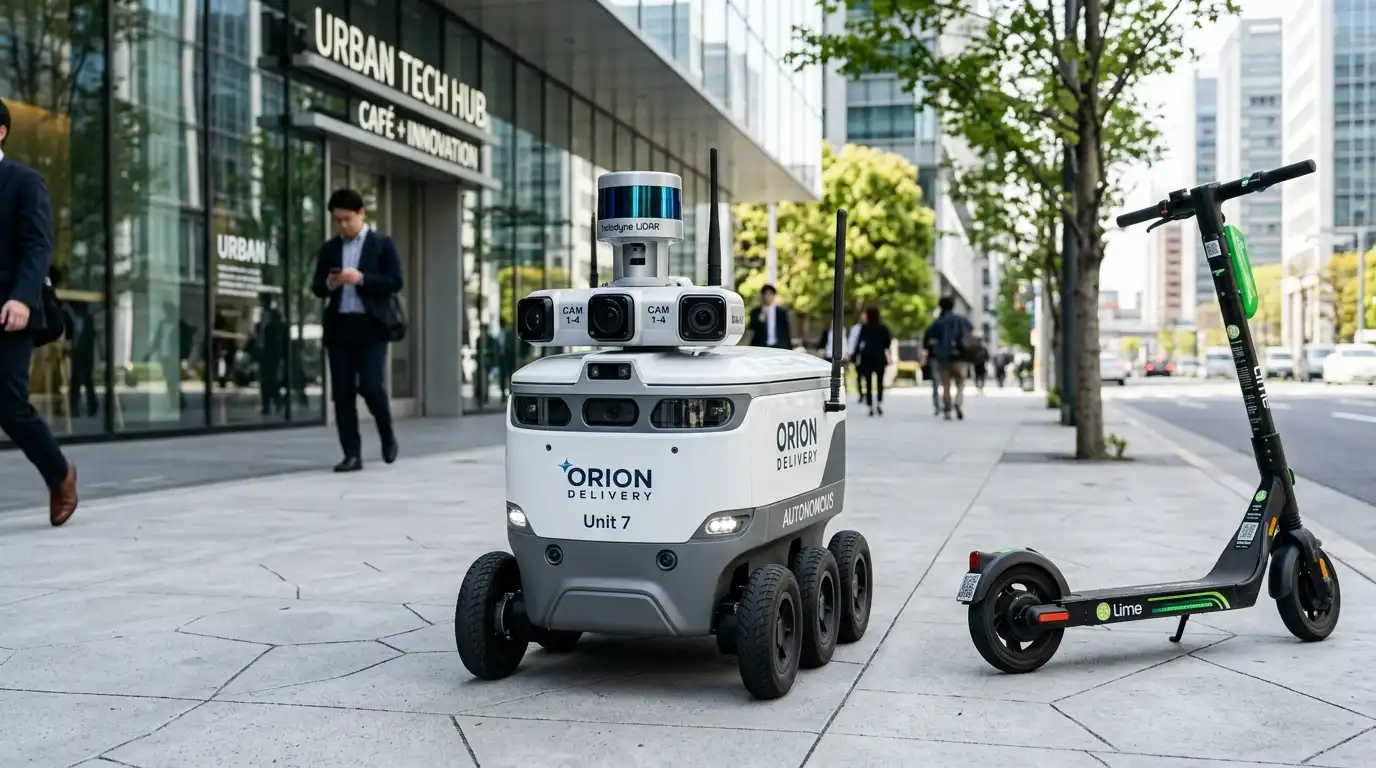
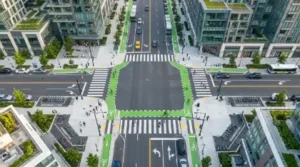 When an autonomous delivery robot collides with an e-scooter, liability determination grows exponentially complex. Shared micromobility platforms rely on user agreements containing broad liability waivers and arbitration clauses. Key questions that arise during investigations include:
- Did the scooter rider violate local traffic codes by riding on the sidewalk instead of designated bike lanes?
- Was the e-scooter improperly parked or abandoned in a public pathway, creating an unpredictable obstacle for the robot’s spatial mapping?
- Did the robot’s collision-avoidance system fail to calculate the acceleration vector of a moving micromobility unit?
In states using modified comparative fault systems, liability is distributed proportionally. If a court finds an e-scooter rider 30% at fault for riding on a restricted sidewalk and the bot operator 70% at fault for a sensor failure, damages are adjusted accordingly.
Data Preservations and Black Box Analytics
Proving fault in AI-driven incidents relies heavily on digital telemetry rather than eyewitness testimonies alone. Modern delivery robots record continuous sensor logs, video feeds, acceleration metrics, and remote intervention commands. Preserving this “black box” data immediately following an accident is essential for establishing:
- Whether the AI system properly detected the obstacle prior to impact.
- The exact moment a remote monitor took control or failed to respond to a system handoff alert.
- Whether network latency delayed braking commands sent from a cloud server to the physical unit.
Current Statutory Frameworks and Future Outlook
States across the country have enacted specific statutes governing “Personal Delivery Devices” (PDDs). These laws often classify robots as non-motor vehicle entities with pedestrian-like right-of-way obligations, establish maximum operational weights (frequently capped between 100 to 550 pounds), set speed limits, and mandate minimum general liability insurance policies (often $100,000 or higher).
As autonomous delivery fleets expand alongside shared micromobility options, legal frameworks will continue shifting from traditional driver-focused torts toward unified autonomous fleet regulations, mandatory telemetry data-sharing standards, and specialized insurance models.